


Helicopter cabin interior noise characterization and reduction using 3D Sound Intensity
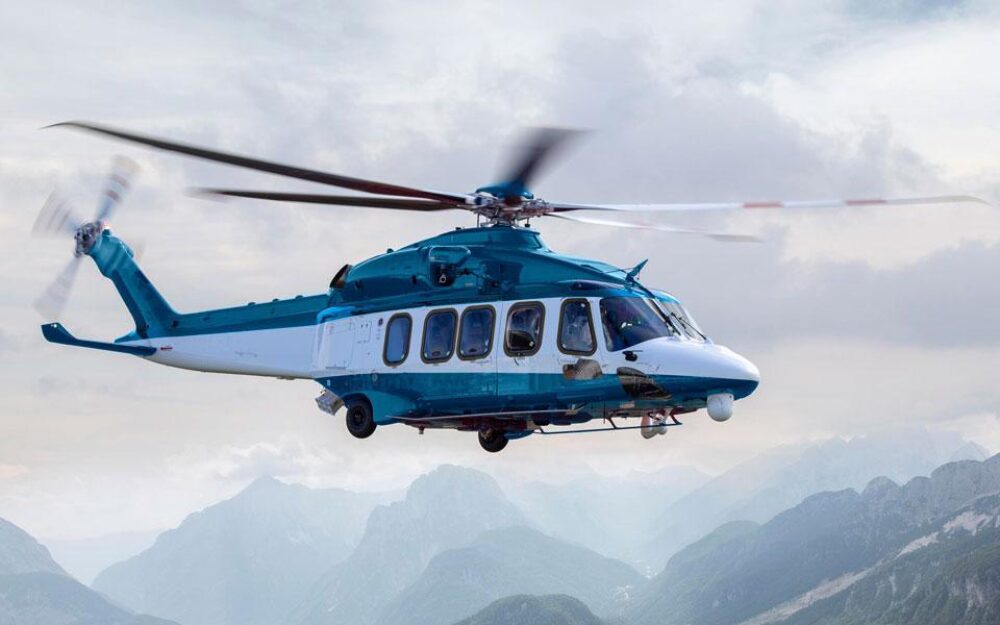
In this case study, Microflown Technologies and MAP21 collaborate to investigate helicopter cabin noise using 3D sound intensity mapping technology. By visualizing and quantifying noise sources and transmission paths, the investigation enables targeted acoustic modifications to improve cabin comfort while minimizing additional weight and space requirements.
STAY UPDATED WITH THE LATEST SOUND AND VIBRATION RESEARCH
Subscribe to our Newsletter
Helicopter Cabin Noise: Challenges and Operational Impact
Helicopter cabins present complex acoustic challenges, with multiple vibro-acoustic and aerodynamic sources contributing to interior noise levels. Prolonged noise exposure can affect crew health, communication and concentration, making effective noise control essential for occupational health and safety compliance. Noise exposure limits can also restrict flight duration, directly impacting the aircraft’s operational capabilities and mission range. Reducing cabin noise is therefore critical not only for comfort and safety, but also for operational efficiency.
Measurement Approach: 3D Sound Intensity Mapping
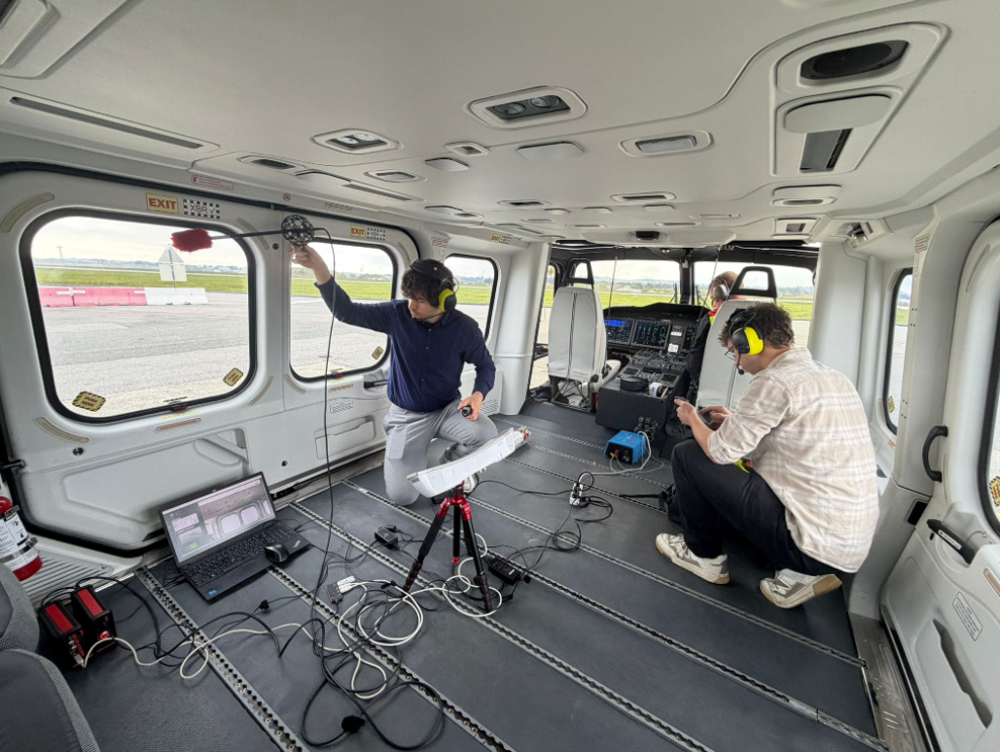
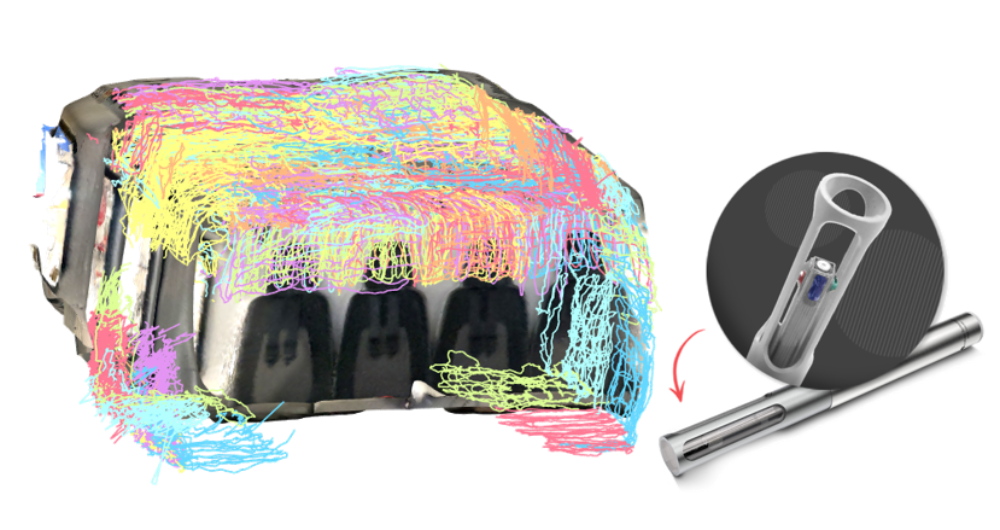
To investigate the acoustic behavior inside the helicopter cabin, Scan&Paint 3D was used to capture and visualize the three-dimensional sound field. The system combines a 3D sound intensity probe, featuring one microphone and three orthogonal particle velocity sensors, with an optical tracking system to accurately determine the probe’s position and orientation during scanning. This enables high-resolution visualization of acoustic energy flow, revealing both the magnitude and direction of sound propagation. The cabin was divided into multiple measurement sections, each scanned for approximately five minutes, resulting in around 140 minutes of measurement data per test condition (ground and hovering).
Quantifying Acoustic Energy Flow and Ranking Noise Sources
Sound intensity measurements provide valuable information about how acoustic energy is radiated and propagates throughout a vehicle cabin. By capturing both the magnitude and direction of acoustic energy flow, dominant noise sources and their contributing surfaces can be accurately identified. Spatial averaging of the sound intensity over individual panels enables the calculation of their radiated sound power, providing a quantitative basis for ranking panel contributions. This approach is particularly valuable for identifying critical areas, prioritizing targeted noise control measures and objectively evaluating the effectiveness of structural modifications.
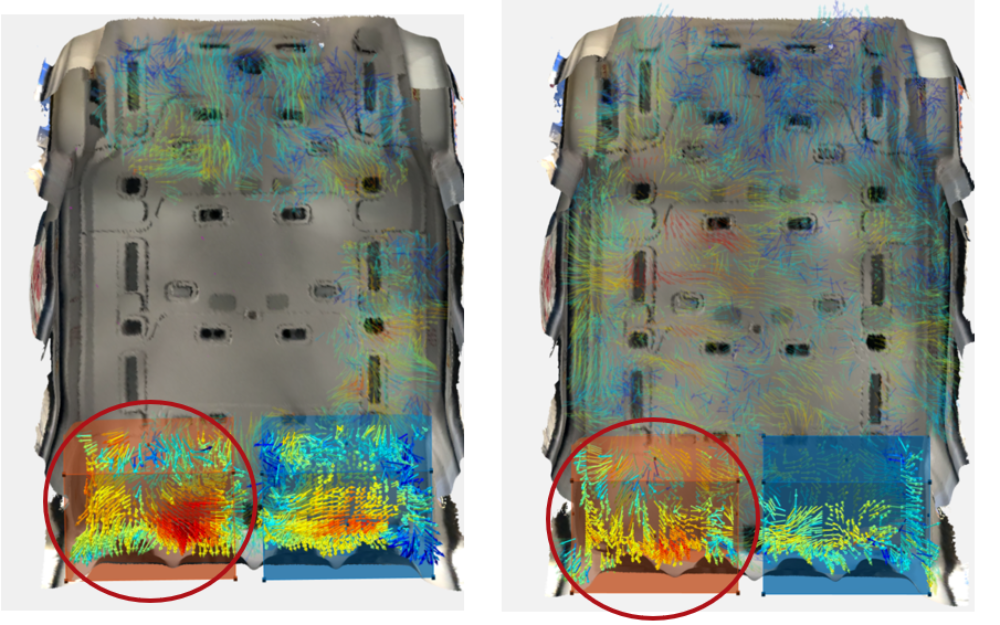
IN-FLIGHT 3D SOUND INTENSITY MAPPING of the Ceiling Liner
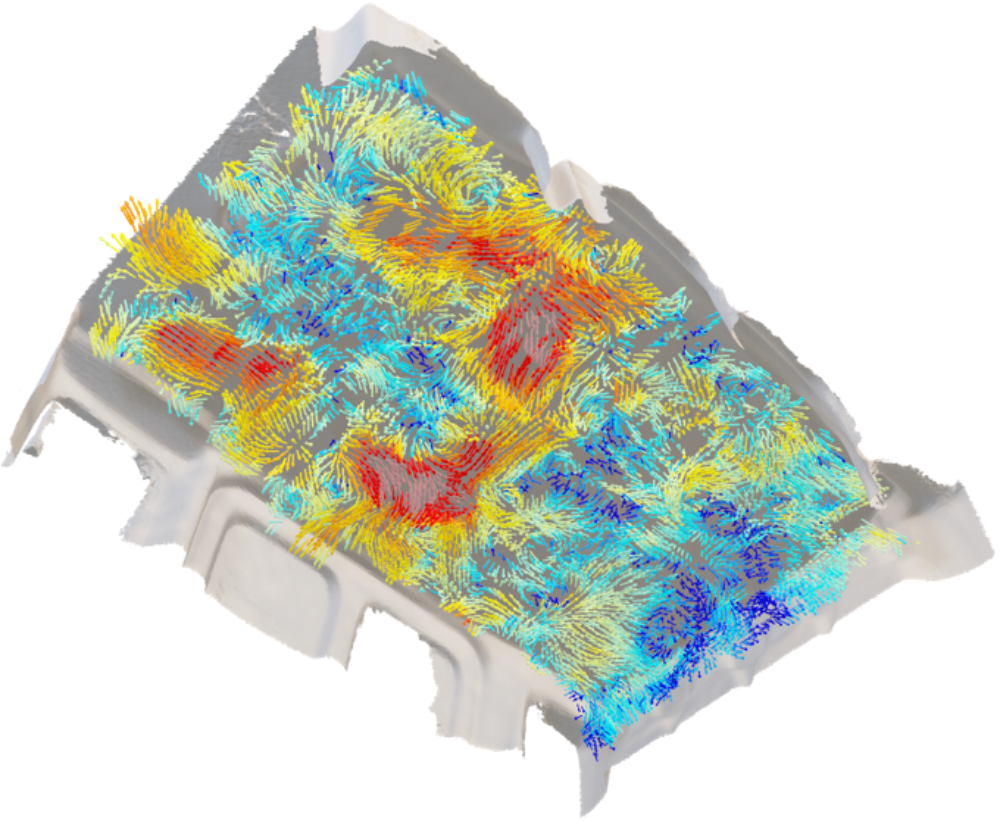
In-flight 3D sound intensity mapping of the helicopter ceiling liner revealed distinct areas of concentrated acoustic radiation, identifying critical regions where targeted noise control measures could be most effective. The spatial distribution and magnitude of the acoustic energy flow varied significantly with frequency, reflecting the different underlying noise sources and excitation mechanisms.
Based on these findings, selective modifications to the original ceiling liner were evaluated, demonstrating substantial noise reductions in key frequency bands. This targeted approach enables effective acoustic optimization while minimizing additional weight and material requirements.
Conclusion: Efficient Cabin Noise Troubleshooting and Optimization
This investigation demonstrates the effectiveness of 3D sound intensity mapping for cabin interior noise analysis, even in complex acoustic environments with multiple contributing sources. Measurements can be performed under both ground and in-flight conditions, provided the operating conditions remain sufficiently stationary throughout the measurement. By identifying and quantifying dominant noise sources, targeted acoustic treatments could be developed and different solutions evaluated directly on-site. This approach enables rapid troubleshooting and iterative optimization of cabin noise, reducing development time while minimizing the weight and space impact of acoustic modifications.
 Scan&Paint 3D