


Reducing noise emissions from Lontra’s LP2 compressor
Lontra
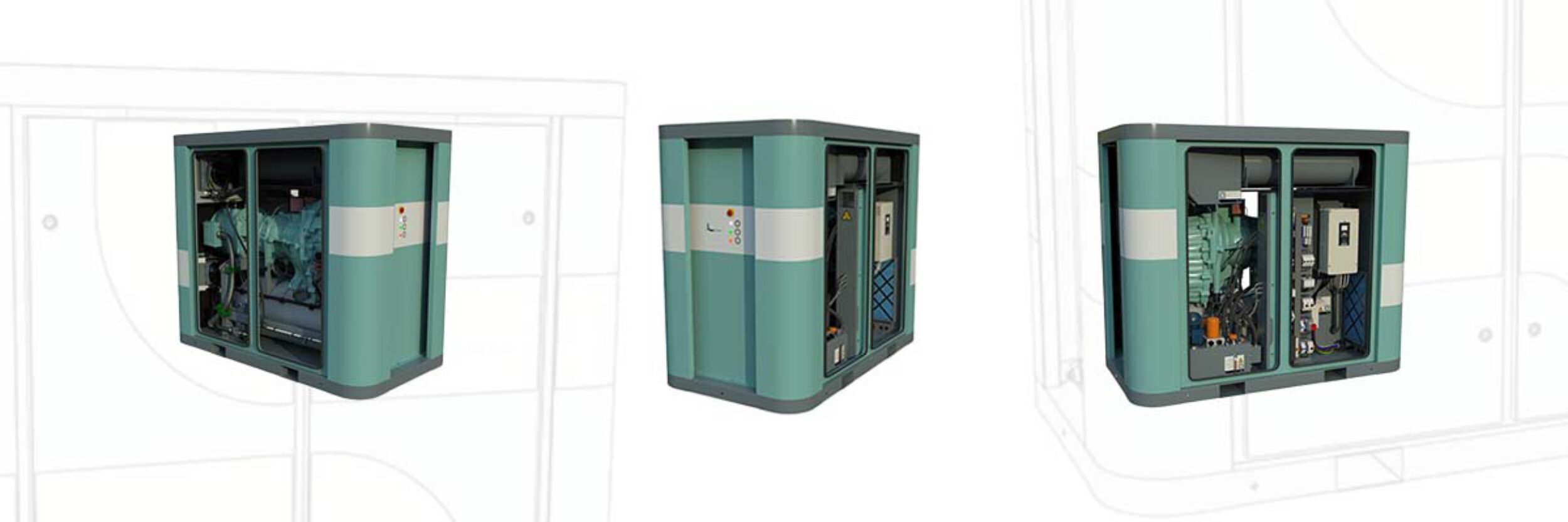
Lontra has a culture of innovation, encouraging thorough engineering evaluation to design better products. Lontra wanted a rigorous approach to identify and precisely target key noise sources in the new blower, to efficiently achieve a quiet product.LP2 is the first fully packaged blower manufactured by Lontra using its proven patented BladeCompressor. It operates at up to 1barG, delivering up to 2600m3/h of air at 2500rpm. It is a positive displacement machine, which produces 1 discharge per revolution, resulting in low frequencies of emitted noise. This poses some unique acoustic challenges for various aspects of the design, and led Lontra to use the Microflown equipment.


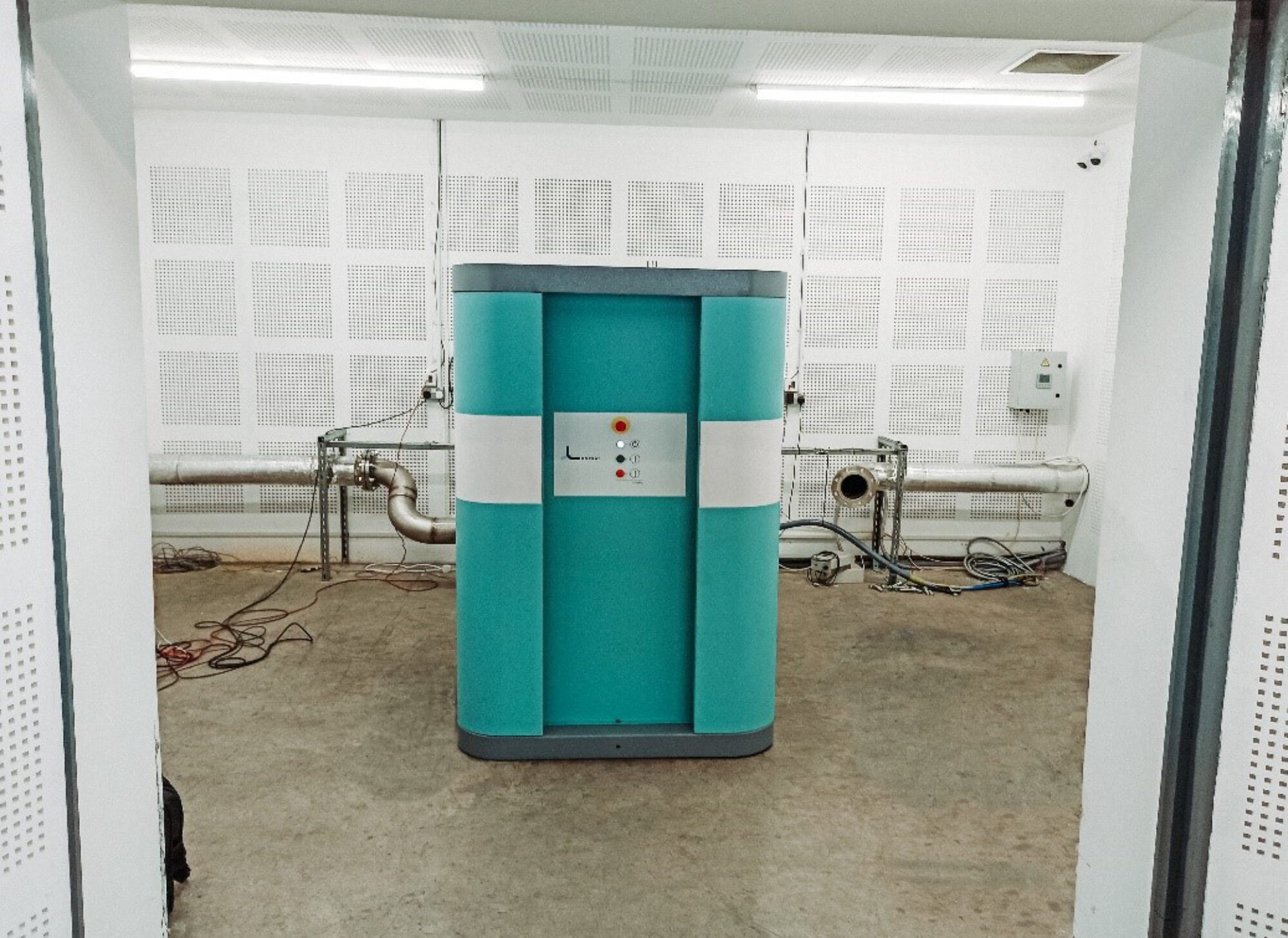



Why use Scan&Paint 3D?
Scan&Paint 3D allowed Lontra to identify sources within the enclosure, prioritise and precisely target them with minimal modifications and cost. The key benefit from Lontra’s perspective is the ability to accurately resolve frequencies below 50Hz, which is critical due to the low running speeds of the LP2. The Their equipment can also calculate sound power even when used in relatively small test cells, which is important to avoid costly facilities.
STAY UPDATED WITH THE LATEST SOUND AND VIBRATION RESEARCH
Subscribe to our Newsletter
Goal & requirements
Reducing noise emissions, especially the low frequency components, from Lontra’s LP2 compressor.
• Quickly identify dominant noise areas
• Measure in-situ, in a normal environment
• Measure low frequencies, even below 50Hz
• Reducing the overall sound power level

Method
A pre-production LP2 unit was scanned using Microflown Scan & Paint 3D to locate where sound was emitted from the enclosure (scanning the outside), and to then identify the sources responsible for those emissions inside the enclosure (scanning the interior of the opened enclosure). Due to the size of the LP2 package, the outside of the enclosure required around 16 individual trajectories, by repositioning the 3D camera. All the trajectories were analysed together in the Velo software, giving a single processed dataset.
This image shows reduced emissions from the front of the enclosure, as well as reduced emissions from all surrounding panels. The scans allowed us to conclude that the front panel was not itself a source, but primarily an emitter of vibration transmitted to it from the rear panel by the inlet silencer, which acted as a bridge between them. By using much softer anti-vibration mounts for the inlet silencer, the transmitted vibration was reduced, and emitted noise from the front (especially at low frequencies) was greatly reduced.
See more results make shure to download the full case study

final results
Using just a single set of acoustic scans, Lontra was able to reduce the A-weighted sound power of the enclosure by over 3dB by identifying a key vibration transmission path inside the enclosure. Furthermore, this improvement was achieved with minimal cost additions to the enclosure, and little previous acoustic data or experience of the Microflown Velo software, which is a great first result for Lontra.
The results were used to inform design changes, which were implemented into a subsequent enclosure:
• Redesigned inlet silencer to better attenuate the fundamental tone, and hence reduce excitation of the rear panel
• Softer anti-vibration mounts to reduce vibration transmission between front and rear panels
• Stiffening of front and rear panels
• Improved outlet pipe cover
• Better quality control for enclosure panel assembly The improved enclosure was then scanned again, and the results were compared to quantify the improvement.
 Scan&Paint 3D